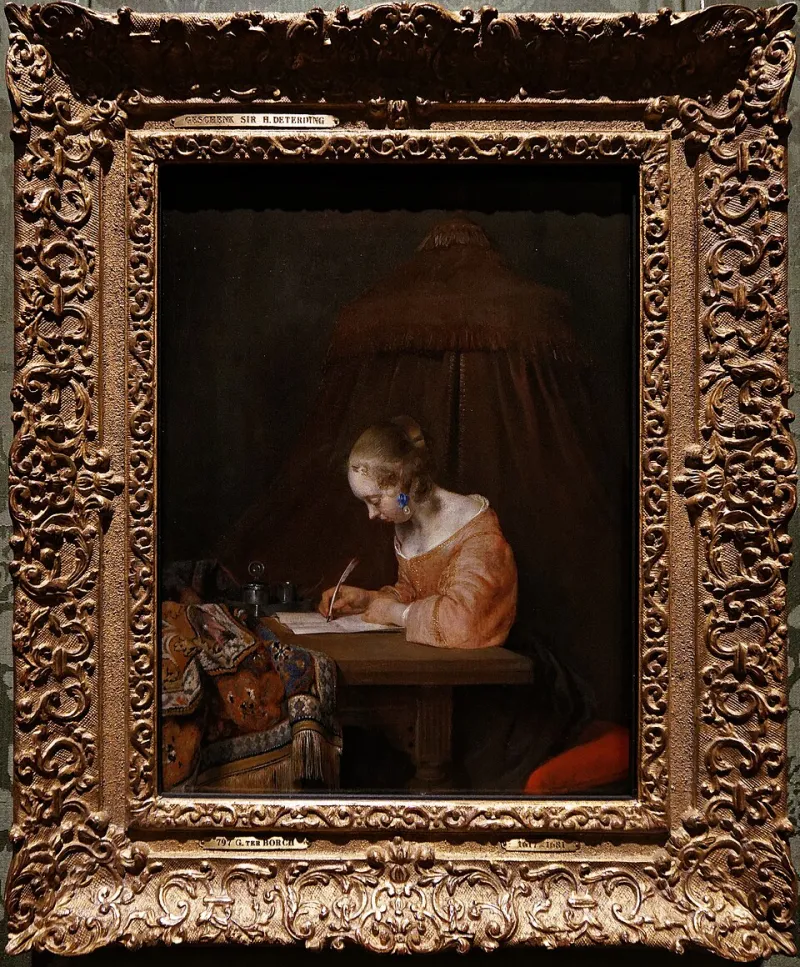
Sign Off Like You Mean It: The Forgotten Power of How You End a Letter

Photo by Photo by John Jennings on Unsplash on Unsplash
Think about the last time someone sent you a handwritten letter. You probably remember the smell of the paper, maybe the color of the ink, possibly even the stamp they chose. But do you remember how they signed off?
If the closing was something like Warmly or With love, there's a decent chance it lingered. If it was just Thanks scrawled above a first name, it probably faded from memory the moment you folded the page back up. That's not an accident. The closing line of a letter is the emotional punctuation of the entire exchange — and most of us have stopped paying attention to it.
At PenPaland, we hear from letter writers all the time who agonize over their opening lines but dash off their closings without a second thought. We think that's a missed opportunity. So we dug into the history, the psychology, and the living practice of letter sign-offs to understand why some closings feel like a warm handshake and others feel like a slammed door.
Where Did All These Closings Come From?
The formal letter closing has roots that stretch back centuries. In 18th- and 19th-century America and Britain, correspondence followed strict social codes. Closing a letter incorrectly — using language too familiar for the relationship, or too stiff for an intimate friend — was a genuine social misstep. Your obedient servant wasn't just a quirky phrase; it was a deliberate signal of deference to someone of higher social standing.
Victorian correspondents had an entire vocabulary of closings calibrated to relationship and context. Yours faithfully was reserved for formal letters to strangers or acquaintances. Yours sincerely implied a warmer, more personal connection. Ever yours or Yours affectionately were the territory of close friends and family. And Your devoted or Your loving — well, those were saved for the letters that got tucked under pillows.
Etiquette historian and author Margaret Holloway, who has spent years studying 19th-century American correspondence, describes this system as a kind of social grammar. "People understood the gradations intuitively," she explains. "Choosing the wrong closing wasn't just awkward — it could genuinely offend. The closing told the recipient exactly where they stood with you."
The Slow Collapse of the Meaningful Sign-Off
Somewhere in the 20th century, things got casual — and then they got lazy. Business letters standardized around Sincerely and Best regards, draining both phrases of their original warmth. Personal letters, freed from Victorian rigidity, swung toward informality. By the time email arrived, most people were closing with Thanks or Best or, in the most stripped-down version, just their first initial.
The problem isn't informality itself. Casual closings can be deeply personal and warm. The problem is thoughtlessness — choosing a closing because it's easy rather than because it's true.
Rachel Torres, who runs a pen pal matching community out of Portland, Oregon, and corresponds with over forty people worldwide, has strong feelings about this. "I can tell so much about a letter writer from their closing," she says. "Someone who writes Take care of yourself is different from someone who writes Until next time. Both are casual, but they signal completely different things about how that person sees the relationship."
What Your Closing Actually Communicates
Let's break this down practically, because the nuances matter more than most people realize.
Warmly is probably the most versatile closing in the modern letter writer's toolkit. It implies genuine affection without presuming intimacy — perfect for pen pals you're still getting to know, or for letters that walk the line between personal and professional.
Yours truly carries an old-fashioned ring that, paradoxically, makes it feel sincere in an era of disposable sign-offs. There's a reason it's survived for over a century. It's a small promise: I am being honest with you. This letter is real.
With gratitude has moved beyond thank-you notes into broader correspondence, and for good reason. It acknowledges that the act of receiving a letter — someone's time, attention, and handwriting — is genuinely worth recognizing.
As ever is a lovely closing for long-term correspondents. It implies continuity, a relationship that exists beyond the edges of any single letter.
Love is the closing that gets misused most often. In American culture, we sometimes slap it on letters to acquaintances out of habit. But when you write it to someone who truly matters, it lands differently — and they know it.
And then there's Thanks, the closing that says almost nothing at all. It's not that gratitude is wrong; it's that Thanks as a closing treats a letter like a transaction. You've received something, you're acknowledging receipt, you're done. For a handwritten letter — an object someone held and breathed on and chose to send you — that feels like a missed note.
Matching Your Closing to the Letter You Actually Wrote
The best closing isn't the most elegant one in the dictionary. It's the one that fits the letter it ends.
If you've written something vulnerable and honest, a breezy Cheers undercuts everything you just said. If you've written a lighthearted, funny letter full of jokes, With deepest affection might feel like a tonal whiplash. The closing should feel like the last note of a song — it should resolve what came before it.
Rachel Torres suggests reading your letter aloud before choosing your closing. "When you get to the end, what does your voice want to do? Does it want to soften? Does it want to leave something open? That's your closing."
For pen pals still in the early stages of a correspondence, etiquette experts often recommend closings that are warm but leave room — Looking forward to your next letter or Until we write again signal enthusiasm without presuming more closeness than exists yet.
For long-term correspondents, the closing can become a kind of private ritual. Some pen pal pairs develop their own signature phrases over years of exchange — an inside joke, a shared reference, something that means nothing to an outside reader but everything to the two people in the correspondence.
Bringing Intention Back to the Final Line
Here's the simplest possible advice: slow down at the bottom of the page. You've already done the hard work of filling it. Don't rush the landing.
Ask yourself: What do I want this person to feel when they finish reading? Do I want them to feel held, or curious, or understood, or gently teased? Let that answer guide the two or three words you choose.
Letter writing is, at its core, an act of attention. You sat down, you chose paper and pen, you thought about another person long enough to fill a page. Your closing is the last thing they'll read before they fold your letter up and carry it with them. Make it count.
Yours truly, PenPaland