Your Brain on Snail Mail: The Surprising Science of Why Letter Writing Feels So Good
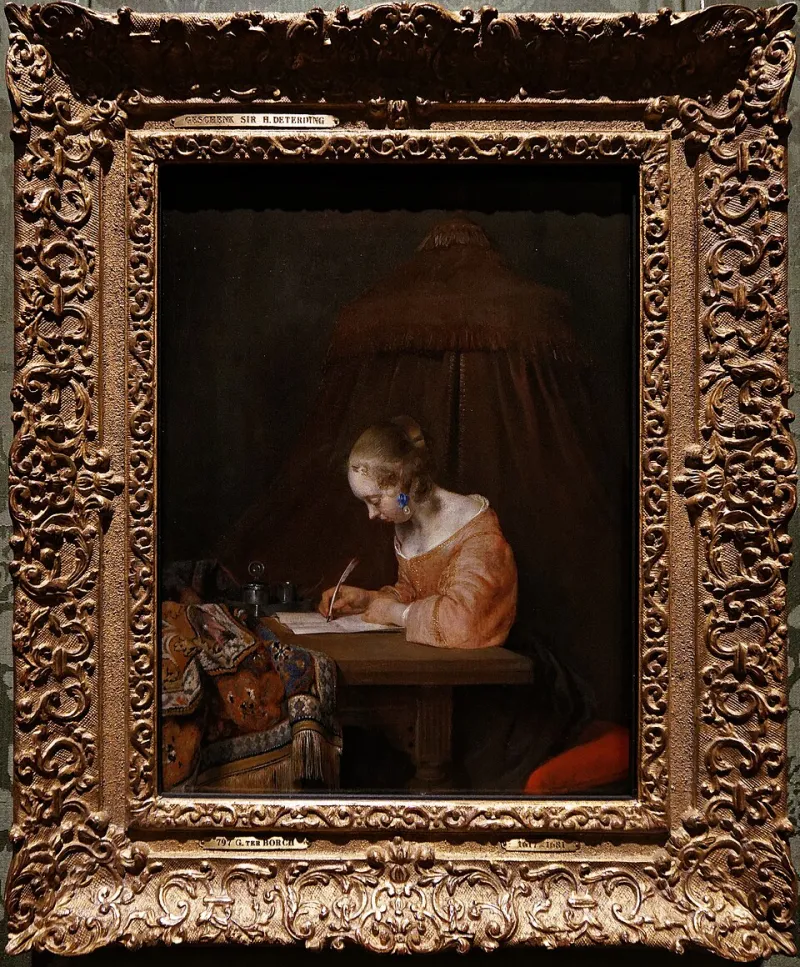
Photo: Txllxt TxllxT, CC BY-SA 4.0, via Wikimedia Commons
We live in a world that never stops pinging. Notifications, emails, group chats, breaking news alerts — the digital noise is relentless. So why does sitting down with a blank piece of paper and an ink pen feel like stepping into a quiet room? It's not just nostalgia. Science has a lot to say about what handwriting does to the human brain, and the findings are genuinely fascinating.
Whether you're a lifelong pen pal or someone who hasn't written a letter since third grade, understanding the neuroscience behind analog correspondence might just convince you to dust off that stationery set sitting in your desk drawer.
Writing by Hand Is a Full-Brain Workout
Here's something most people don't realize: typing and handwriting are completely different cognitive experiences. When you type, you're mostly pressing keys on autopilot. Your brain recognizes letters as symbols and your fingers do the rest. But when you write by hand, your brain is working in a much more integrated way.
Research from the University of Stavanger in Norway found that handwriting activates neural networks associated with memory, motor control, and sensory processing simultaneously. You're not just recording information — you're encoding it. That's why students who take notes by hand tend to retain material better than those who type. The brain treats the physical act of forming letters as meaningful, not mechanical.
For letter writers, this means every word you put on paper carries a little more weight — both for you and for the person receiving it. You chose those words carefully. Your hand formed each one. That intentionality is embedded in the page itself.
The Anticipation Loop: Why Waiting for Mail Feels Surprisingly Good
In psychology, there's a well-documented phenomenon called "anticipatory pleasure" — the joy we get from looking forward to something. Digital communication basically eliminates this. You send a text, you get a response in minutes. The loop closes almost instantly.
Letter writing is different. You write, you seal the envelope, you drop it in the mailbox — and then you wait. Days pass. Maybe a week. And during that time, your brain is quietly doing something kind of wonderful. Dopamine, the neurotransmitter associated with reward and motivation, gets released not just when we receive something good, but when we anticipate it.
Pen pals who've been exchanging letters for years often describe the feeling of seeing a familiar handwriting on an envelope in their mailbox as one of the small highlights of their week. That reaction isn't sentimental fluff — it's your brain's reward system doing exactly what it was designed to do.
Slowing Down Is a Stress Interrupt
One of the quieter benefits of letter writing is what it does to your nervous system. When you sit down to write a letter — really write one, not dash off a quick note — you're essentially forced to slow down. You have to think before you write because mistakes are harder to erase. You have to organize your thoughts. You have to be present.
This kind of focused, deliberate attention is remarkably close to what mindfulness practitioners work hard to achieve. Studies on flow states — those moments of deep, absorbed focus — show that activities requiring fine motor skill and sustained concentration can lower cortisol levels and reduce anxiety symptoms. Letter writing checks both of those boxes.
There's also something grounding about the physical ritual of it: choosing your paper, uncapping a pen, maybe brewing a cup of coffee first. These small, tactile decisions signal to your brain that something intentional is about to happen. It's a sensory experience that screens simply cannot replicate.
The Empathy Effect of Writing to a Specific Person
Here's where letter writing gets really interesting from a psychological standpoint. When you write a letter, you're not broadcasting to a feed. You're writing to one person. You're picturing their face, thinking about what they'd find funny, what they need to hear, what's been going on in their life.
This kind of perspective-taking — actively imagining another person's inner world — is one of the core mechanisms of empathy. And it's something that social media and group texts don't particularly encourage. Research in social psychology suggests that one-on-one, thoughtful communication builds stronger relational bonds than broadcast-style sharing.
For pen pals especially, this effect compounds over time. The more letters you exchange, the better you understand your correspondent, and the more your empathy muscles get exercised. It's a relationship built word by word, letter by letter.
Choosing Stationery Is Actually a Form of Self-Expression
Don't underestimate the psychological significance of picking out your paper and envelope. When you choose floral stationery, or a vintage-style card, or a particular ink color, you're making aesthetic decisions that reflect your personality and communicate something nonverbal to your reader.
This kind of creative self-expression has documented mental health benefits. Art therapists have long recognized that even small acts of aesthetic choice-making can boost mood and reduce feelings of helplessness. You're not just writing a letter — you're curating an experience for someone else, which feels good for the same reason that giving a thoughtful gift does.
A Low-Tech Prescription Worth Trying
You don't need to overhaul your life to tap into these benefits. Start small. Write one letter this week — to a friend across the country, a relative you haven't caught up with properly, or even a pen pal you find through a community like ours here at PenPaland.
Give your brain a break from the scroll. Let a thought develop slowly enough to make it onto paper. Feel the pen move. Then seal the envelope and let the postal service do its thing.
Your brain — and probably the person on the other end — will thank you for it.