Confessions to Strangers: Why Your Pen Pal Knows the Real You Better Than Your Best Friend Does
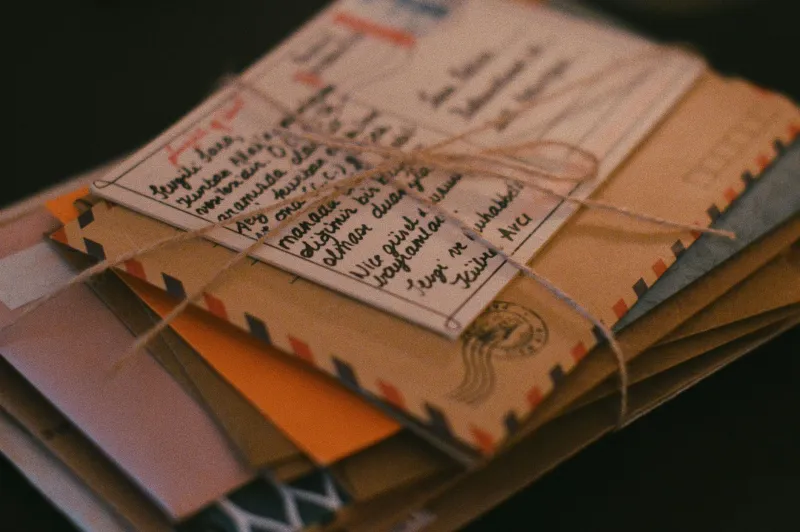
Somewhere in Portland, Oregon, a woman named Delia has a box under her bed. Inside it are forty-three letters from a woman she's never met — a pen pal in rural Wisconsin she's been writing to for almost nine years. The letters are full of things Delia's closest friends don't know. Her complicated feelings about her marriage. The career she quietly abandoned. The grief she still carries from a miscarriage she never told her family about.
"She knows things about me that nobody in my daily life knows," Delia says. "And honestly? That's exactly why I can tell her."
This isn't unusual. Ask almost any long-time pen pal correspondent, and you'll hear some version of the same thing. There's something about writing to a distant stranger — someone who exists outside your social world, who has no stake in your reputation, who will never run into you at the grocery store — that unlocks a version of yourself you didn't even know you were hiding.
Psychologists have a name for the dynamic. Researchers call it the "stranger on a train" effect, a well-documented phenomenon where people disclose deeply personal information to strangers they're unlikely to encounter again. The temporary, low-stakes nature of the interaction removes the social consequences that normally keep us guarded. But pen pal correspondence takes that effect and stretches it across months and years, deepening it into something far more complex and meaningful.
The Safety of Distance
Dr. James Pennebaker, a psychologist at the University of Texas at Austin whose research on expressive writing has influenced decades of therapeutic practice, has long argued that writing about difficult emotions produces measurable psychological benefits — reduced anxiety, improved immune function, better cognitive processing of painful experiences. What's interesting about pen pal correspondence is that it combines Pennebaker's writing effect with the social dimension of being genuinely heard by another person.
That combination is powerful. When you write a letter to a pen pal, you're not performing for a social media audience. You're not managing your image in real time the way you might during a face-to-face conversation. The physical distance between you and your correspondent creates what therapists sometimes call a "protected space" — room to say the unsayable without fearing immediate judgment or consequence.
"People tend to self-censor heavily in close relationships because the stakes are high," says Dr. Nina Hartley, a clinical psychologist based in Chicago who has incorporated letter-writing exercises into her therapeutic practice. "You don't want to burden your sister. You don't want your spouse to worry. You don't want your best friend to see you differently. With a pen pal, those social calculations largely disappear. The relationship exists in its own container, separate from the rest of your life."
The Slow Reveal
There's also something about the pace of letter writing that matters enormously. Unlike a text message dashed off in thirty seconds or a phone call where you're reacting in real time, a letter gives you hours — sometimes days — to figure out what you actually think and feel before you commit it to paper.
That deliberate slowness creates a kind of emotional excavation. You sit down to write about your week, and somewhere between the mundane details and the second page, you find yourself writing something you didn't plan to say. Something true. Something you maybe didn't even know you needed to articulate until the pen was moving.
"I've had people tell me they discovered things about themselves through letters that years of therapy hadn't surfaced," Dr. Hartley says. "The act of writing, without interruption, without someone else's face reacting in real time, can take you to unexpected places."
Long-time correspondents describe this as one of the most addictive qualities of pen pal exchange. Marcus, a 44-year-old high school teacher in Atlanta who has maintained pen pal relationships with people in France, Japan, and Argentina for over fifteen years, calls it "the second draft of yourself."
"In real life, I'm pretty guarded," he says. "I'm a dad, I'm a teacher, I have a role to play. But in my letters, I can be uncertain. I can be confused. I can say 'I don't know what I'm doing with my life' without anyone panicking about it. My pen pals get the version of me that's still figuring things out."
When Strangers Know More Than Family
This creates what researchers and correspondents alike describe as a paradox: the people who know us least in conventional terms — who have never seen our faces, never met our families, never shared a meal with us — can sometimes know us most deeply.
It's a strange inversion of how we usually think about intimacy. We tend to assume that closeness is built through shared physical experience, through time and proximity. And in many ways, it is. But there's a particular kind of knowing that comes from reading someone's unfiltered inner world, letter after letter, year after year.
"My pen pal in Minnesota has read things I've written that I've never said out loud to anyone," says Priya, a 31-year-old graphic designer in Boston. "She knows my fears, my embarrassing memories, things I've done that I'm not proud of. My mom doesn't know half of that. My college roommate doesn't know half of that. But somehow this woman I've never met in person holds all of it."
Priya pauses. "It doesn't feel weird, though. It feels like a relief."
The Letter as Confession Booth
There's an almost confessional quality to the pen pal letter, and that's not an accident. Historically, people have always sought out figures outside their immediate social circles — priests, therapists, advice columnists — as recipients of their most private truths. The pen pal fills a similar role, but with a crucial difference: the relationship is reciprocal. Your correspondent is also confessing. You're holding each other's secrets simultaneously.
That mutual vulnerability is what transforms the exchange from simple correspondence into something closer to genuine intimacy. And because the relationship lives primarily on the page, it's insulated from the messiness of everyday life in ways that other close relationships simply aren't.
"There's no history to manage," Marcus says. "My pen pal didn't know me when I was twenty-two and making bad decisions. She knows the person I am now, through my own words, on my own terms. That's rare. Most people who know you well also know your worst moments. A pen pal only knows what you choose to share."
The Question Worth Sitting With
Of course, some people find this aspect of pen pal correspondence unsettling rather than liberating. If you're telling your deepest truths to a stranger in Wisconsin rather than to your partner or your best friend, does that suggest something is missing in your closest relationships? Or does it simply reflect the fact that different kinds of relationships serve different emotional needs?
Dr. Hartley leans toward the latter. "Humans have always needed multiple types of connection," she says. "The pen pal relationship isn't a replacement for closeness — it's a supplement to it. It fills a need that proximity-based relationships sometimes can't."
Delia, the woman with the box of letters under her bed, has thought about this a lot. She doesn't think her pen pal correspondence signals anything broken about her marriage or her friendships. She thinks it signals something true about human nature.
"We all have parts of ourselves that need an audience that isn't already invested in who we are," she says. "Someone who can hear you without needing you to be anything in particular. That's what a pen pal gives you. And honestly? I think everyone deserves to have that."
Maybe that's the real paradox. It's not that strangers know us better than the people who love us. It's that sometimes, being known requires a little distance — and a blank page, and a stamp, and someone on the other end who's willing to read every word.